The NEDP is guided by the vision of positioning Sri Lanka as a competitive logistics and knowledge-intensive export hub. It is structured around six strategic objectives covering logistics, trade facilitation, trade finance, promotion, standards, and skills development.
The implementation framework is based on cross-sectoral enablers and priority sectors. Enablers include logistics, trade facilitation, finance, promotion, quality systems, and skills development.
Priority sectors include auto components, minerals, rubber, marine industries, spices, digital services, electronics, and processed food and beverages.
The strategy emphasizes diversification, value addition, and global integration.
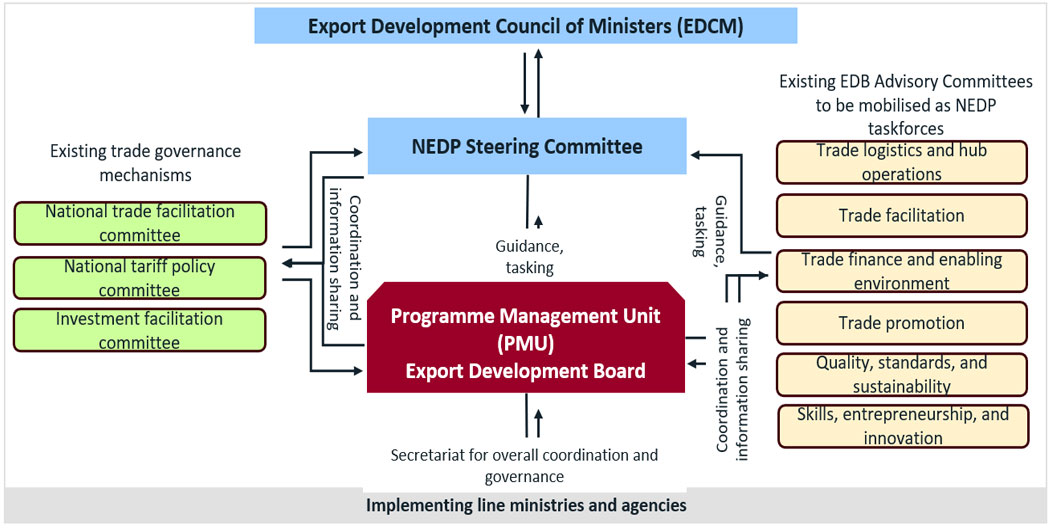
EDCM, chaired by the President, to oversee NEDP implementation
A robust governance structure, with EDB serving as Secretariat to drive NEDP implementation
Export concentration in apparel and tea remains high, while diversification into new products and markets is limited. Structural constraints include weak industrial upgrading, logistics inefficiencies, and limited access to trade finance, particularly for SMEs.
Market concentration increases vulnerability to external shocks, highlighting the need for diversification into Africa, Asia, Middle East, and ASEAN markets.
Key early priorities include full digitalisation of trade facilitation through the National Single Window, removal of procedural bottlenecks, resolution of VAT refund delays, and strengthening trade finance systems.
The success of the NEDP depends on effective implementation, requiring a whole-of-government and whole-of-nation approach with strong private sector engagement.
If implemented effectively, the NEDP will enable Sri Lanka to transition into a diversified, innovation-driven, and resilient export economy with deeper regional and global integration.