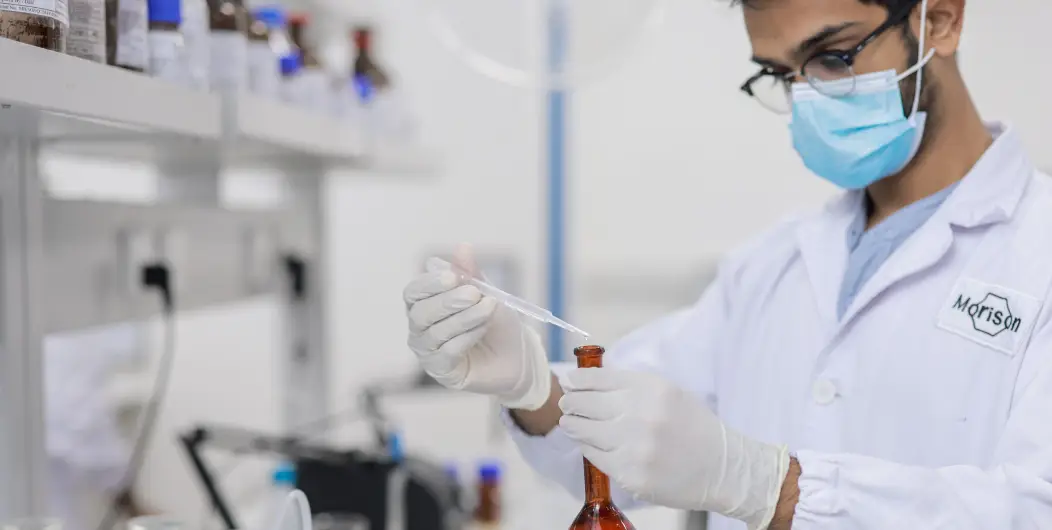
Sri Lanka’s pharmaceutical sector employs a significant and growing workforce across manufacturing, quality assurance, regulatory affairs, research and development, and commercial operations. As the industry scales toward higher-value export markets, attracting, training, and retaining skilled professionals has become a strategic priority for manufacturers, government institutions, and academic partners alike. The sector’s workforce profile reflects both the strengths of an established manufacturing base and the talent gaps that must be addressed to realise its full export potential.
The pharmaceutical sector is one of Sri Lanka’s most skills-intensive manufacturing industries. Employment spans a broad range of technical, scientific, and operational functions, from formulation scientists and GMP engineers to regulatory affairs officers, supply chain specialists, and quality control analysts. Facilities across the Western Province account for the majority of direct employment, with manufacturing operations concentrated in and around Colombo, though ongoing investment in pharmaceutical zones is expected to broaden the geographic distribution of sector employment over the medium term.
The State Pharmaceuticals Manufacturing Corporation (SPMC) remains the largest single public-sector employer in the industry, anchoring a workforce trained to WHO GMP standards and serving as a reference employer for quality-driven pharmaceutical manufacturing in Sri Lanka. Leading private manufacturers, including Astron (Pvt) Limited, CIC Lifesciences (Pvt) Limited, Gamma Interpharm (Pvt) Limited, Celogen Lanka (Pvt) Limited, and Morrison Ltd, collectively contribute a substantial share of total sector employment, with individual facility headcounts ranging from several dozen to several hundred staff depending on production scale and product complexity.
Beyond direct manufacturing employment, the sector supports a wider ecosystem of affiliated roles across raw material procurement, packaging supply, distribution logistics, medical representation, and quality testing services. This broader employment network amplifies the economic contribution of the pharmaceutical sector and underscores its importance as a driver of skilled employment across the Sri Lankan economy.
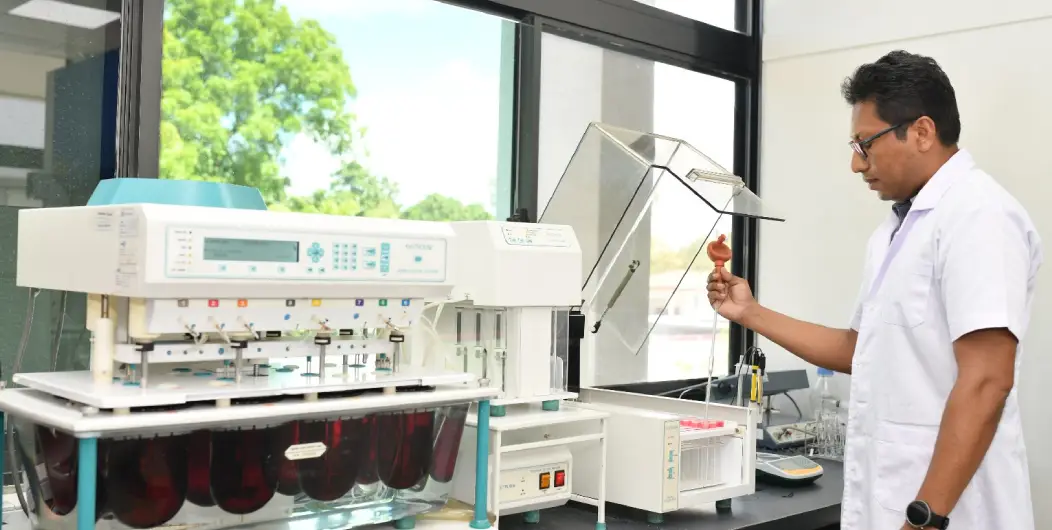
Pharmaceutical manufacturing requires a layered workforce spanning scientific research, technical production, quality systems, regulatory compliance, and commercial operations. The following roles represent the primary occupational categories within Sri Lanka’s pharmaceutical sector:
Responsible for product development, formulation design, stability testing, and process optimisation. These professionals hold degrees in pharmacy, pharmaceutical sciences, or chemistry and apply specialist knowledge to develop dosage forms including tablets, capsules, liquids, injectables, and topicals. They are central to new product launches, generic drug development, and the adaptation of formulations for specific export markets.
Enforce GMP compliance across all manufacturing operations. Quality Assurance (QA) professionals develop and maintain quality systems, standard operating procedures, and compliance documentation, while Quality Control (QC) analysts conduct in-process and finished product testing. Together, these teams form the backbone of the sector’s regulatory compliance function and are among the most sought-after professional groups by both domestic manufacturers and international procurement bodies.
Manage the preparation and submission of product dossiers for registration in domestic and export markets. This includes compiling Common Technical Document (CTD) dossiers, coordinating with the NMRA for local product registration, and interfacing with foreign regulatory authorities. As Sri Lankan manufacturers pursue entry into more regulated markets, demand for regulatory affairs expertise with international exposure has grown significantly.
Execute batch manufacturing activities on the production floor, operating mixing, granulation, compression, filling, and packaging equipment under GMP conditions. Operators are trained in standard operating procedures, equipment handling, and cleanroom protocols. They represent the largest occupational group within manufacturing facilities and are critical to maintaining production efficiency and quality output.
Maintain cleanroom infrastructure, pharmaceutical-grade equipment, and utility systems including HVAC, purified water systems, and compressed air installations. Qualified engineers with specialist knowledge of pharmaceutical manufacturing environments are in short supply nationally, representing one of the sector’s most acute workforce gaps. Proficiency in equipment validation, calibration, and preventive maintenance is essential for facilities operating under GMP frameworks.
Conduct post-market safety monitoring, adverse event reporting, and support clinical trial activities. As Sri Lanka develops its bioequivalence testing infrastructure and engages more actively in clinical research, demand for professionals trained in pharmacovigilance methodology, Good Clinical Practice (GCP), and safety data management is increasing.
Manage the sourcing, importation, and logistics of Active Pharmaceutical Ingredients (APIs) and packaging materials from overseas suppliers, primarily in India and China. Given the sector’s high dependence on imported inputs, supply chain professionals with expertise in vendor qualification, import regulations, cold chain management, and inventory optimisation play a critical role in maintaining uninterrupted production.
Represent pharmaceutical manufacturers in domestic and export markets, supporting product detailing, tender management, and customer relationship management. As Sri Lankan companies seek to expand their footprint in Africa, the Middle East, and Southeast Asia, the ability to navigate diverse regulatory environments and build distributor networks internationally is an increasingly valued commercial competency.
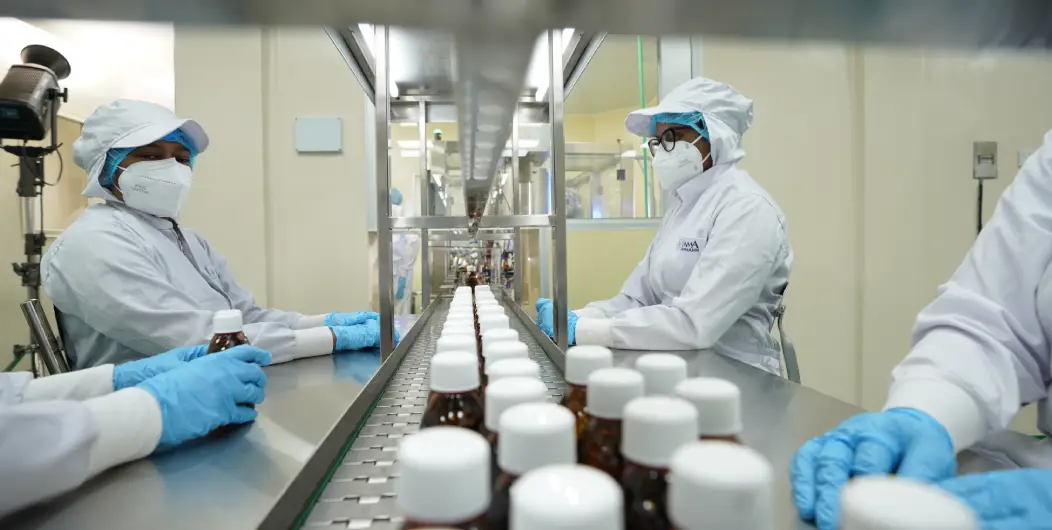
The transition toward regulated export markets is reshaping the skills profile required across Sri Lanka’s pharmaceutical sector. Technical competencies that were previously sufficient for domestic manufacturing are now being supplemented by more specialised capabilities in international regulatory science, advanced quality systems, and bioequivalence methodology. The following skill areas are currently prioritised by employers across the sector:
The ability to prepare and submit product dossiers in compliance with ICH guidelines, WHO prequalification requirements, and the regulatory frameworks of target export markets is a critical and underserved competency. Professionals who can navigate CTD submission formats, respond to regulatory queries from importing authorities, and manage product lifecycle compliance across multiple jurisdictions are in sustained demand as manufacturers pursue new market registrations.
In-depth knowledge of WHO GMP, PIC/S guidelines, and ISO quality management standards is foundational to the sector’s export ambitions. Employers place particular value on professionals who can conduct internal GMP audits, develop corrective and preventive action (CAPA) frameworks, and maintain the documentation systems required to pass international regulatory inspections. This competency is especially critical as more facilities pursue WHO GMP certification for entry into tender-based procurement markets.
Expertise in designing, executing, and analysing bioequivalence studies is increasingly required for registration of generic products in regulated markets. With local BE testing capacity limited, professionals who can coordinate with accredited testing facilities, interpret BE data in line with international standards, and prepare compliant BE summaries for dossier submission are highly sought after.
Specialised knowledge of cleanroom design, HVAC validation, purified water system qualification, process validation, and equipment calibration is essential for facilities operating under GMP. Sri Lanka faces a structural shortage of engineers with pharmaceutical-specific qualifications, making this one of the most constrained talent segments in the sector.
Regulatory bodies globally are placing increasing emphasis on data integrity standards, requiring manufacturers to demonstrate that all quality records are accurate, complete, attributable, and unaltered. Professionals with expertise in electronic batch recording systems, audit trail review, and digital quality management platforms are growing in demand as facilities modernise their documentation infrastructure.
Commercial skills in identifying tender opportunities, preparing technical and financial bids for public-sector procurement tenders, and managing relationships with international distributors are increasingly valued as Sri Lankan manufacturers expand beyond domestic markets. This includes familiarity with UN, WHO, and government procurement processes in target regions.
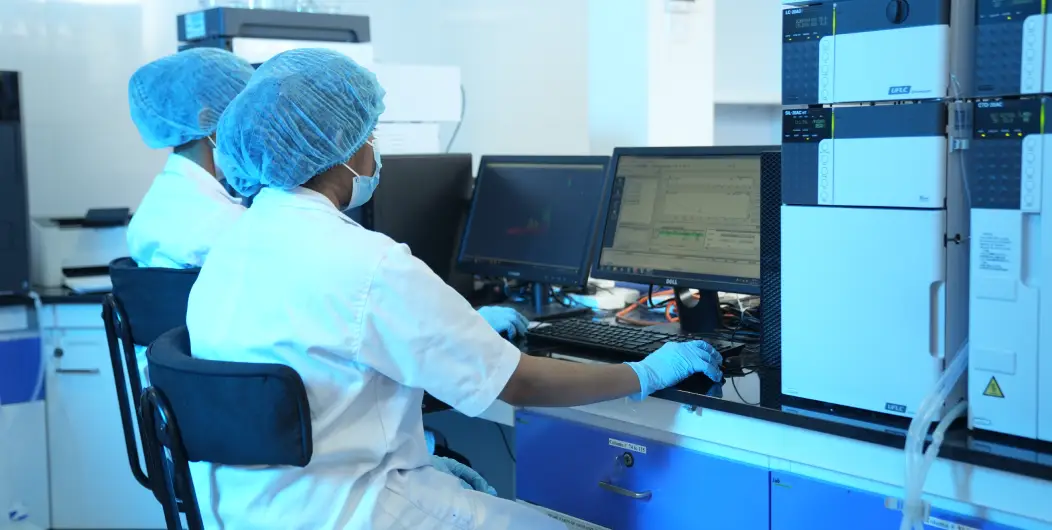
Sri Lanka’s pharmaceutical workforce is supported by a network of universities, professional institutions, and industry training programmes that collectively provide the foundational education and continuing professional development required for sector employment. The following institutions and pathways contribute most directly to pharmaceutical workforce development:
Several universities in Sri Lanka offer degree programmes in pharmacy, pharmaceutical sciences, chemistry, and biomedical science that form the primary academic pipeline for sector employment. The University of Sri Jayewardenepura, University of Colombo, University of Peradeniya, and University of Kelaniya are among the leading providers of pharmacy and pharmaceutical sciences programmes accredited for professional practice. These institutions also conduct research in formulation science, natural product drug discovery, and bioequivalence methodology, creating pathways from academic research to industrial application.
The State Pharmaceuticals Manufacturing Corporation operates structured in-house training programmes for GMP compliance, production operations, and quality assurance. These programmes provide practical, facility-based training aligned with WHO GMP standards and serve as a model for workforce development in the broader private sector. SPMC’s training function has historically contributed to a shared pool of GMP-competent professionals across the industry.
Professional bodies and management institutes offer postgraduate diplomas and certification programmes in pharmaceutical management, supply chain, and quality systems that allow working professionals to develop complementary business and regulatory competencies alongside their technical qualifications. These programmes are particularly relevant for mid-career professionals seeking to move into regulatory affairs, quality management, or commercial leadership roles.
TVEC-accredited programmes provide technical and vocational training for production operators and laboratory technicians, contributing to the skilled workforce at the operational level within manufacturing facilities. These programmes are instrumental in broadening the talent pipeline beyond university graduates, enabling facilities to recruit and train production staff with standardised technical competencies.
The NRC facilitates funding for postgraduate and postdoctoral research in pharmaceutical sciences, providing a pathway for advanced scientific talent to develop expertise in areas including formulation development, clinical pharmacology, and bioequivalence. NRC-supported researchers contribute to the industry’s innovation base and represent a source of highly qualified professionals for research-oriented roles within the sector.
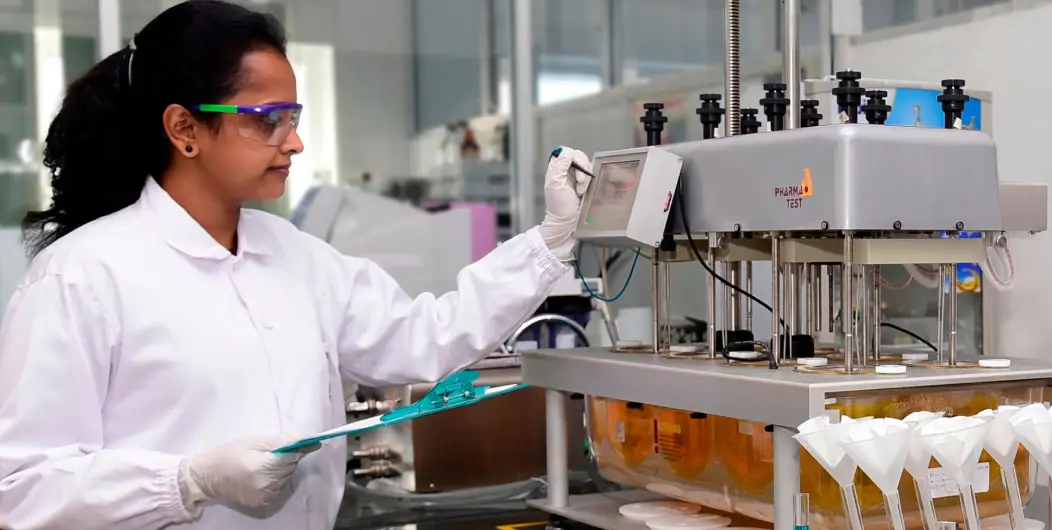
The Sri Lankan government, in coordination with industry associations and international development partners, has introduced a number of initiatives to address workforce gaps and build the sector’s human capital base. These programmes reflect recognition that skilled workforce availability is a binding constraint on the sector’s export ambitions and overall competitiveness.
The NIRDC collaborates with the Export Development Board (EDB) to accelerate the translation of pharmaceutical research into commercially viable products. A core component of this initiative involves developing the scientific and technical workforce capable of managing the product development pipeline from formulation research through to commercial manufacturing. NIRDC-supported projects provide structured mentorship and applied training opportunities for researchers and scientists transitioning into industry roles.
The Export Development Board provides targeted support to pharmaceutical manufacturers pursuing export market certification and market development, including access to training resources, trade mission participation, and technical assistance programmes. EDB’s involvement in workforce capacity building extends to facilitating knowledge-sharing between local manufacturers and international partners, supporting the transfer of regulatory and quality system expertise relevant to export market access.
The UGC has funded upgrades to university laboratories supporting bioequivalence testing and quality assurance research, directly expanding the capacity of academic institutions to train professionals in these specialist areas. These infrastructure investments are critical to building domestic BE testing capability and reducing dependence on overseas facilities for generic drug registration studies.
Government plans for dedicated pharmaceutical manufacturing zones include provisions for shared infrastructure, specialised training centres, and industry-academia collaboration facilities. These zones are intended to create an enabling environment for workforce development alongside manufacturing investment, consolidating training resources and enabling smaller manufacturers to access shared training infrastructure that would be cost-prohibitive to develop independently.

Despite meaningful progress in building pharmaceutical workforce capacity, several structural challenges continue to constrain the sector’s ability to recruit and retain the talent required to compete in regulated export markets.
The supply of qualified persons (QPs), regulatory affairs professionals, and GMP-trained engineers falls significantly short of industry demand. These roles require highly specialised knowledge that takes years to develop, and the limited scale of the domestic pharmaceutical industry has historically constrained the depth of the available talent pool. As manufacturers scale up and pursue international certification, the gap between talent supply and sector demand is widening.
Sri Lanka’s pharmaceutical professionals, particularly pharmacists, biomedical scientists, and quality assurance specialists, are in demand internationally and are emigrating at rates that reduce the effective domestic talent supply. The ability of overseas employers in the Middle East, United Kingdom, Australia, and Canada to offer significantly higher remuneration packages has created persistent attrition pressures that are difficult for local manufacturers to counter without commensurate improvements in compensation and career development opportunities.
Bioequivalence study design and management remains a highly specialised and undersupplied competency within the local workforce. The limited number of professionals with hands-on BE experience constrains the sector’s ability to pursue generic drug registrations in regulated markets at scale. Addressing this gap requires both investment in domestic BE testing infrastructure and the development of structured training programmes capable of producing accredited BE practitioners.
Engineers with qualifications and practical experience in pharmaceutical manufacturing environments, including cleanroom systems, HVAC validation, purified water systems, and equipment qualification, are scarce in Sri Lanka. Most engineering graduates enter general industrial or civil engineering roles rather than pharmaceutical-specific pathways, and the absence of dedicated pharmaceutical engineering curricula at local universities compounds the shortage. This gap is particularly acute for facilities undergoing GMP facility upgrades in preparation for WHO or PIC/S inspections.
Feedback from industry indicates that graduates entering the pharmaceutical sector often require significant on-the-job training to bridge gaps between academic preparation and practical manufacturing competencies. Areas including GMP documentation, regulatory submissions, quality system management, and process validation are often insufficiently covered in undergraduate pharmacy and science programmes relative to industry requirements. Closer collaboration between universities, industry associations, and the NMRA is needed to align curricula with evolving sector demands.
Strengthening Sri Lanka’s pharmaceutical workforce will be central to realising the sector’s long-term export ambitions. Addressing talent shortages through targeted investment in specialised training, deepening industry-academia collaboration, and implementing retention-focused employment frameworks will equip the sector to meet the increasingly complex human capital requirements of regulated export market access. A skilled, stable, and internationally competitive pharmaceutical workforce is both a prerequisite for sector growth and a foundational asset for Sri Lanka’s broader economic development agenda.