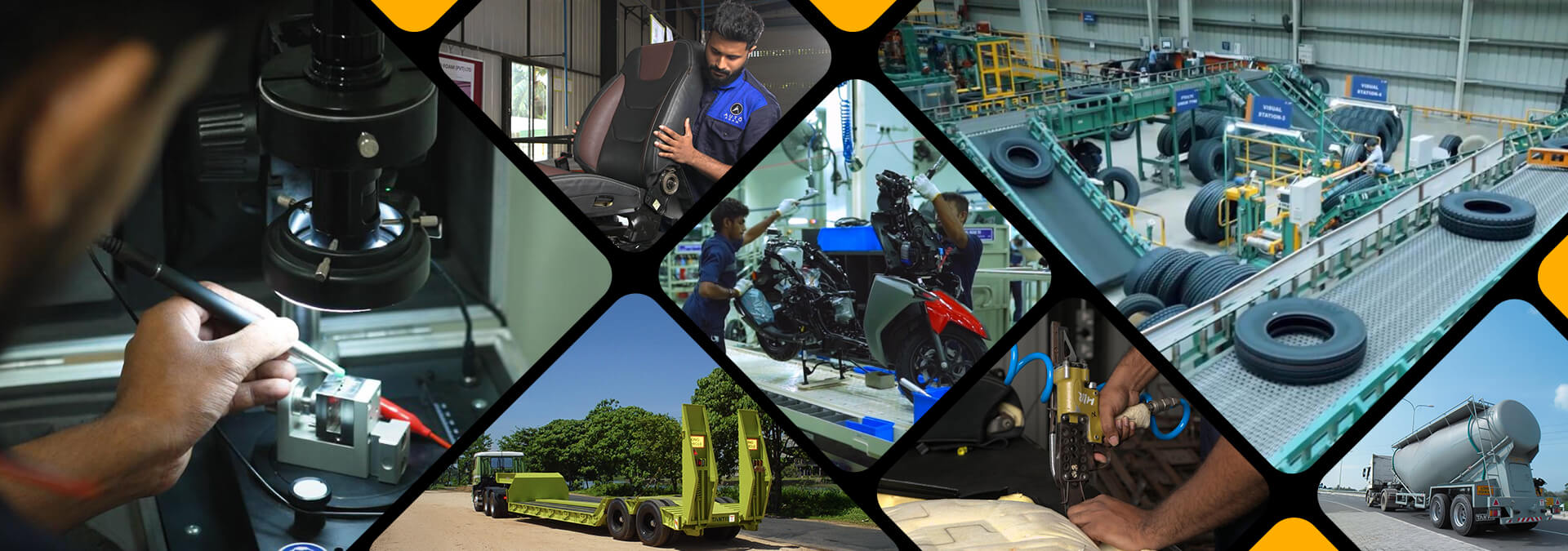
Cluster exports represent a strategic approach to international trade where geographically concentrated groups of interconnected companies, suppliers, and associated institutions collaborate to enhance collective competitiveness and export performance. In Sri Lanka's automotive spare parts sector, specialised clusters have emerged based on product specialisation, manufacturing capabilities, and regional concentration, creating synergies that amplify export potential.
Industrial clusters benefit from shared infrastructure, collective knowledge pools, specialised labour markets, and collaborative research and development. For automotive spare parts, clusters enable manufacturers to achieve economies of scale, share best practices in quality assurance, collectively pursue international certifications, and present unified value propositions to global buyers. The cluster approach reduces individual company risks while building regional reputations for specialised excellence.
Sri Lanka's natural rubber industry forms the foundation for the most prominent automotive cluster. With an annual rubber production of approximately 82,600 MT (53,000 MT consumed by export-oriented companies), the rubber cluster specialises in pneumatic tyres, solid tyres, industrial rubber products, automotive gaskets, washers, bushes, seals, hoses, and specialised rubber components.
This cluster benefits from vertical integration spanning rubber plantations, processing facilities, and finished product manufacturing. The rubber cluster generated approximately USD 400 million in automotive-related exports in 2020, with products serving automotive, industrial, and medical applications. Major export destinations include the USA, Pakistan, Japan, China, Germany, Belgium, and Czech Republic.
The government's Rubber Industry Master Plan (2017-2026) specifically targets high-performance products, including automotive components, supporting cluster development through policy incentives and infrastructure investments.
Specialised manufacturers focused on automotive electrical systems form a distinct cluster producing wire harnesses, electrical cables, sensors, dashboard electronics, and related components. This cluster generates approximately USD 200 million in annual exports, serving both OEM and aftermarket channels.
The electrical components cluster benefits from Sri Lanka's growing electronics manufacturing capabilities and ICT sector integration, enabling production of increasingly sophisticated automotive electronics, including components for electric vehicles and advanced driver assistance systems.
Manufacturers specialising in metal fabrication and mechanical systems produce steering racks and conversion kits, suspension components, exhaust systems, radiators, and precision-machined parts. This cluster leverages Sri Lanka's metalworking expertise and engineering capabilities to serve both domestic assembly operations and export markets.
The mechanical components cluster has developed strength in right-hand drive conversion systems, with companies like Autogroup International achieving global leadership in this niche, exporting to over 40 countries.
A highly specialised cluster focused on safety-critical components represents Sri Lanka's premium positioning in global automotive supply chains. This cluster produces impact sensors for seat belts and airbags, supplying world-renowned brands including Toyota, Honda, Aston Martin, Volvo, Opel, and BMW.
The safety systems cluster supports the highest quality standards, with manufacturers pursuing IATF 16949 certification and collaborating with global tier-one suppliers. The technical partnership between local manufacturers and companies like Magna Worldwide demonstrates the cluster's integration into sophisticated global value chains.Batteries and Energy Storage Components Cluster: An emerging cluster focused on battery materials and components is forming around Sri Lanka's distinctive high-purity vein graphite reserves approximately 7,000 MT produced annually at 90–99% carbon purity, positioning Sri Lanka among the world's premium graphite sources . This cluster targets battery-grade anode material production, battery pack assembly, and energy storage solutions for the growing electric vehicle and renewable energy markets. Investment priority areas include battery assembly operations, graphite processing facilities, and battery management system manufacturing.
The government is establishing dedicated industrial zones for automobile manufacturing and rubber product manufacturing, creating geographic clusters that facilitate supplier networks, shared infrastructure, and collaborative innovation. Investment of LKR 1,500 million supports automobile industry infrastructure development, including industrial parks designed to cluster assembly operations with component suppliers.
These industrial zones provide specialised facilities, including testing laboratories, logistics infrastructure, and training centres that benefit all cluster members while reducing individual capital requirements.
The Sri Lanka Automotive Component Manufacturers Association (SLACMA) serves as the primary coordinating body for cluster development, facilitating information sharing, collective marketing, export promotion, and advocacy for policy support. SLACMA members collaborate on quality standards, workforce development, and international partnerships.
The Automobile Industry Council, initiated by the government, develops curriculum for technical and vocational education specifically for the automotive sector, supporting cluster competitiveness through skilled workforce development.
The Sri Lanka Export Development Board provides cluster-specific support, including organisation of sector pavilions at international trade fairs, collective buyer-seller missions targeting specific geographic markets, cluster-level market research and intelligence, and facilitation of collaborative export consortia where multiple manufacturers jointly fulfil large international orders.
Cluster members benefit from shared marketing materials, collective brand development for Made in Sri Lanka automotive components, and coordinated participation in international certification programs with government subsidies covering 50% of IATF certification costs.
The rubber components cluster has achieved success in specialised markets, with Sri Lanka recognised as the world's only manufacturer of high-quality latex crepe rubber and the largest exporter of this premium product. The cluster's specialisation in niche rubber products has enabled it to achieve premium pricing and market leadership.
The safety systems cluster's supply relationships with premium automotive brands demonstrate how specialised clusters can achieve global recognition and sustained export growth despite competition from larger manufacturing nations.
Government plans to grow automotive component exports from USD 200 million to USD 1 billion, including targeted cluster development initiatives: expansion of specialised industrial zones, enhancement of R&D facilities serving cluster members, development of cluster-specific supply chain linkages with international OEMs, and promotion of cluster-based participation in global automotive value chains, particularly for electric vehicle components.
The cluster approach enables Sri Lankan manufacturers to collectively compete with larger nations by leveraging specialised excellence, collaborative innovation, and coordinated market positioning that individual companies could not achieve independently.
Sri Lanka is a fast-growing automotive manufacturing hub, offering global buyers cost-efficient, high-quality vehicles and components. With strong policy support, 50+ component makers, 30 assembly plants, and partnerships with leading brands like Hyundai and TATA, Sri Lanka ensures international standards, strategic location advantages, and supply chain resilience.