2026-03-27
Tea, apparel, spices, and gemstones are considered the cornerstone of Sri Lankan exports. These are the pillars that have long defined the country’s position in global trade. Yet just off the coastline, both literally and figuratively, lies an opportunity that has received far less attention than it deserves: the boat export sector, specifically leisure and recreational vessels.
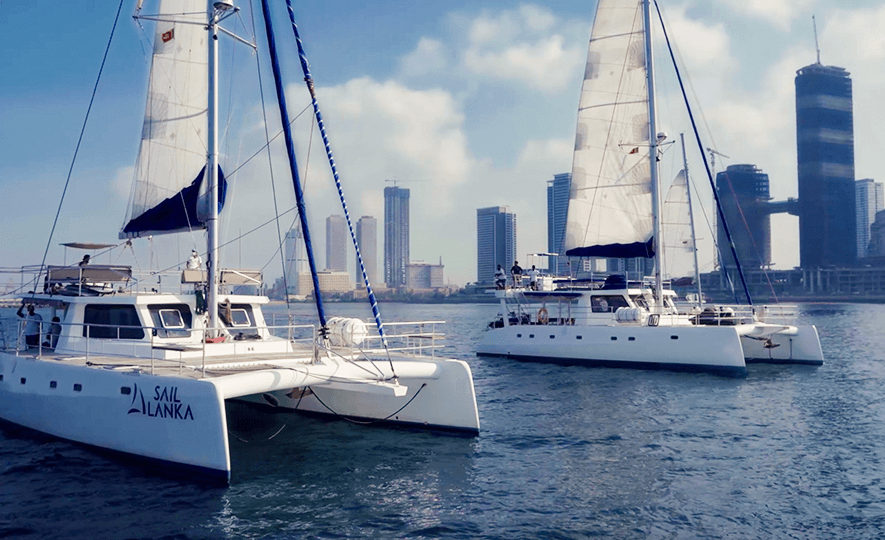
With over 1,340 kilometres of coastline, a civilisation built on seafaring, and a global leisure boat market valued at over USD 37 billion in 2024 and growing [1], the conditions for Sri Lanka to carve out a meaningful niche in this sector are more compelling than ever. The question is no longer whether the opportunity exists; it is whether Sri Lanka is ready to seize it.
Long before fibreglass and outboard motors, Sri Lanka’s coastal communities were skilled wooden boat builders. The oruwa, the traditional outrigger canoe, is one of the most elegant examples of a wooden boat in South Asian maritime history. Lightweight, hydrodynamically efficient, and crafted entirely by hand using locally sourced timber, the oruwa represents a body of knowledge passed down through generations of craftspeople along the island’s southern and northern coastlines.
This is not merely historical sentiment. In a global leisure boat market increasingly drawn to artisanal craftsmanship, sustainability narratives, and uniqueness, Sri Lanka’s boat-building heritage is a genuine commercial asset. Premium buyers in Europe and North America are actively seeking vessels that carry a story, and Sri Lanka has one worth telling.
The country’s connection to maritime culture also means a workforce with an intuitive understanding of boat construction. Skilled carpenters, fibreglass boat manufacturers, and marine craftspeople are present in coastal communities from Negombo to Galle to Trincomalee. With the right investment in training and upskilling, this existing human capital can be the foundation of a modern, export-ready industry catering to global demand for Sri Lanka boat manufacturers.
The global leisure boats market is forecast to grow at a compound annual growth rate of around 5–6% through 2030, driven by rising disposable incomes, the expansion of marina infrastructure in emerging markets, and a post-pandemic surge in outdoor leisure activities [1][2][3]. Key demand regions include the United States, Western Europe, Australia, and the Gulf Cooperation Council countries.
Notably, Asia-Pacific is the fastest-growing regional market, with countries like India, the Maldives, Thailand, and the UAE driving rising demand [4], regions where Sri Lanka enjoys geographic proximity and existing trade relationships. Within this broader market, several vessel categories present particularly accessible entry points for Sri Lankan boat manufacturers:
Sceptics may point to the dominance of established boat-building nations like Italy, the Netherlands, the United States, Turkey, and, more recently, China as evidence that Sri Lanka faces an insurmountable challenge. This misses the point. Sri Lanka does not need to out-produce Italy or out-price China to build a viable export industry. Instead, the country can compete on a combination of factors that no single competitor fully replicates:
A credible boat export strategy must also confront the headwinds. The most significant barrier is certification and compliance. Export markets, particularly in Europe, require vessels to meet CE marking standards under the EU Recreational Craft Directive 2013/53/EU [5][6]. The US market mandates compliance with ABYC and NMMA standards. Building the technical expertise, testing infrastructure, and quality management systems to achieve and maintain these certifications requires sustained investment and institutional support.
Brand recognition is another gap. Sri Lanka does not yet have a credible identity in the global leisure boat market. Building that reputation takes time, deliberate marketing investment, and the development of showcase products that can be presented at international boat shows such as Southampton Boat Show, Boot Düsseldorf, and the Dubai International Boat Show.
Infrastructure limitations also need to be addressed. Marine manufacturing requires specialised facilities: covered construction sheds, dry docks or slipways, finishing and painting bays, and testing access to open water. A consolidated marine industrial zone, potentially in Galle, Trincomalee, or Hambantota, would significantly improve the sector’s attractiveness to investors and buyers.
Finally, financing and working capital remain perennial challenges for small and medium-scale manufacturers. Export-oriented financing instruments, including pre-shipment credit and insurance coverage, need to be more accessible to the sector.
Building a credible boat export industry in leisure and recreational vessels will not happen overnight, but a phased approach can generate momentum within a five-to-ten-year horizon.
Sri Lanka’s leisure vessel export potential sites within a broader conversation about the country’s blue economy and the sustainable use of ocean resources for economic growth. Tourism, fisheries, aquaculture, and port logistics have traditionally dominated this space, but maritime manufacturing from day cruiser boats to custom sailing yachts adds a new, higher-value dimension.
For a country working to diversify its export basket, reduce its trade deficit, and create quality employment in coastal communities, the recreational boating sector checks multiple boxes simultaneously. It creates skilled jobs in regions that need them, earns foreign exchange through boat export, and builds industrial capabilities that have spillover effects in adjacent sectors like marine tourism equipment, safety gear, and boat maintenance services.
Sri Lanka has the heritage, the skills, the geography, and increasingly the global tailwinds to build a meaningful presence in the leisure boat market. The path forward starts with recognising what already exists: skilled wooden boat builders, emerging fibreglass boat manufacturers in Sri Lanka, and a coastline that has always been central to the island’s identity.
What is needed now is coordinated ambition, manufacturers willing to invest in compliance and quality, institutions ready to provide targeted support, and a national export narrative that proudly includes boats alongside tea and textiles. Sri Lankan boat manufacturers have the foundation. The global market is ready. It is time to set sail.