2025-12-16
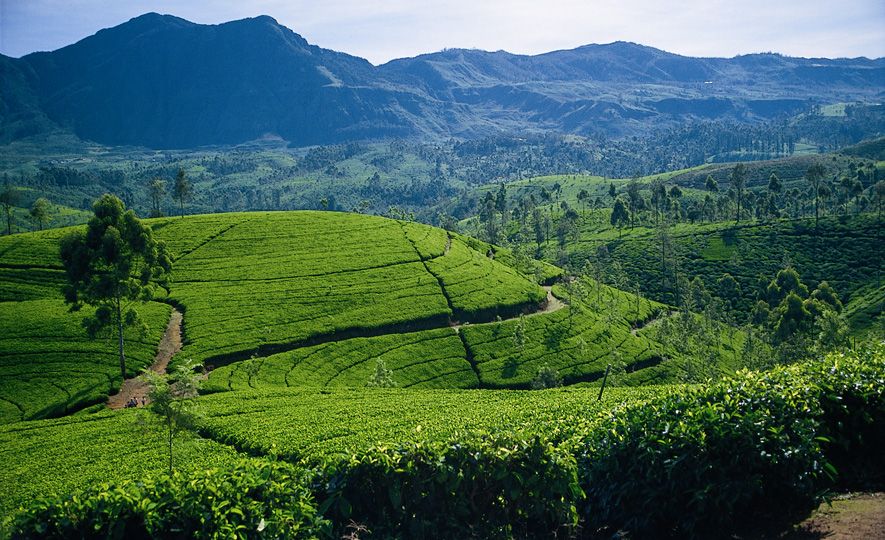
Grown in the misty highlands of Sri Lanka, Ceylon tea has long been a must-have favourite among tea enthusiasts. Nurtured by the island’s sun-kissed soil and lavished by its unique climate, Ceylon Tea features an aroma and flavour that brings tropical luxury blended with elite prestige, never failing to provide its clientele with a century-long tea tradition.
Ceylon Tea's enduring success in both the domestic and export markets is a direct result of its quality. Sri Lanka takes great pride in the fact that Ceylon tea has captivated a vast customer base, transcending geographical boundaries and generations across various continents.
Ceylon Tea extracts are concentrated forms of the essential components derived from Ceylon Tea leaves. Rather than consuming brewed tea, manufacturers isolate these key elements, typically utilising water, ethanol, or other solvent-based extraction techniques, and then convert them into products such as powders, liquids, or capsules.
Depending on the type of tea, the extracts include catechins like EGCG, which is a potent antioxidant mainly found in green tea; caffeine, which varies by tea type and extraction process; polyphenols, with antioxidant and anti-inflammatory properties; amino acids; and flavonoids, which are compounds that support overall health.
Sri Lanka, a key exporter of tea in the global market, produces and exports many types of tea under the name Ceylon Tea and the famous Lion Logo. Some widely favourite types of tea exported from Sri Lanka include Ceylon Black Tea, Ceylon Green Tea, and Ceylon White Tea.
Known for its distinct aroma, bold flavour, and rich coppery colour, Ceylon Black Tea is produced exclusively in Sri Lanka, where the combination of elevation, climate, and manufacturing expertise creates one of the most recognisable black teas in the world.
The production process begins with fresh tea leaves being withered to reduce their moisture content by at least 50%, allowing the leaves to soften and prepare for rolling. Once rolled, the leaves undergo full oxidation, a critical step that intensifies the tea’s colour, aroma, and strength. As one of the most oxidised tea varieties manufactured in Sri Lanka, Ceylon Black Tea naturally carries a higher caffeine content than many other tea types. This characteristic has helped cultivate a stable, loyal consumer base that prefers its briskness and energising effect.
When transformed into Ceylon Black Tea extract, these qualities become even more concentrated. The extract captures the tea’s key bioactive compounds, such as theaflavins, thearubigins, caffeine, and polyphenols, in a potent and stable form. Manufacturers typically use water or ethanol-based extraction methods to isolate these components, resulting in powders or liquid extracts that preserve Ceylon Tea’s signature flavour profile and antioxidant properties.
Today, Ceylon Black Tea extract is widely used in:
Because Sri Lanka maintains strict quality and purity standards in tea cultivation and processing, Ceylon Black Tea extracts are often positioned as a premium ingredient, valued for their consistency, traceability, and the unique character that comes from the island’s terroir.
A relatively young addition to Sri Lanka’s tea portfolio, Ceylon Green Tea has rapidly grown into a high-demand export, carving out a strong position in the global tea market. Known for its clean taste, fresh aroma, and high antioxidant content, Ceylon Green Tea is shipped in substantial volumes to key markets such as the Middle East and the former Soviet region, where consumers have shown consistent preference for its distinct profile.
What sets Ceylon Green Tea apart is the way it is produced. Unlike fully oxidised black tea, green tea undergoes minimal oxidation, preserving the natural catechins, especially EGCG, that drive its health appeal. Sri Lanka’s high-grown regions contribute a lighter, brisker flavour compared to the grassy or smoky notes commonly found in East Asian green teas. This differentiation has been a major factor behind its expanding export potential year after year.
When processed into Ceylon Green Tea extract, these characteristics become even more valuable. Using controlled water or solvent extraction methods, manufacturers isolate and concentrate the tea’s most beneficial components, including catechins (EGCG, EGC, ECG), polyphenols, amino acids like L-theanine, and natural caffeine. The result is a potent extract in powder or liquid form that delivers the functional benefits of green tea in a stable, easy-to-formulate ingredient.
Ceylon Green Tea extract is widely used across industries such as:
Backed by Sri Lanka’s rigorous manufacturing standards and clean agricultural practices, Ceylon Green Tea extracts are positioned as a premium, traceable, and high-purity ingredient. As global demand for natural antioxidants and functional ingredients continues to surge, the market trajectory for Ceylon Green Tea and its extracts remains strongly upward.
The least processed of all Sri Lankan teas, Ceylon White Tea, often referred to locally as Silver Tips, stands out for its delicacy, rarity, and premium positioning. The production method is intentionally minimal to preserve the natural integrity of the buds. Only the youngest, unopened tea buds are handpicked at dawn and dried gently under natural sunlight, without rolling or mechanical intervention. This light handling produces a tea with distinctly subtle characteristics, including mild sweetness, a silky mouthfeel, and a clean finish that appeals to consumers with refined or sensitive palates.
Because of its limited annual yield and labour-intensive harvesting, Ceylon White Tea attracts a niche but highly loyal global customer base. Its gentle flavour, low astringency, and naturally lower caffeine content give it a unique identity compared to more robust black or grassy green teas.
When converted into Ceylon White Tea extract, these qualities become both concentrated and commercially versatile. Extraction typically focuses on capturing its naturally high levels of polyphenols, antioxidants, flavonoids, and amino acids, especially L-theanine, which contributes to relaxation without drowsiness. Compared to other tea extracts, white tea extracts retain a softer flavour and a milder chemical profile, making them ideal for applications that require potency without bitterness.
Ceylon White Tea extract is increasingly used in:
Ceylon White Tea extracts are positioned as ultra-premium, clean-label ingredients at the top end of the tea extract market. This high status is due to Sri Lanka's white tea being harvested in small volumes and produced under strict artisanal conditions, guaranteeing strong provenance, low processing, and exceptional purity.
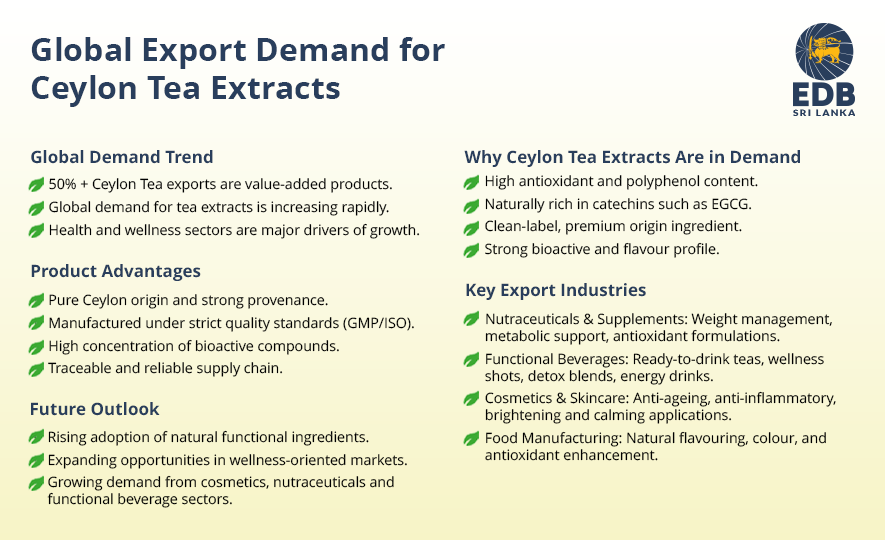
The global market is showing increasing export demand for Ceylon Tea Extracts, driven by current trends within the Ceylon Tea industry. This shift aligns with a growing preference for value-added Ceylon Tea products, which significantly benefits the extract market. Strong macro-trends, particularly in the health, wellness, and premium consumer sectors, underpin this robust and increasing demand.
Sri Lanka is seeing a clear shift toward higher-margin, value-added tea products at present. According to the Tea Industry Sector Overview, more than 50% of Sri Lanka’s tea exports are now in value-added form, including green tea, instant tea, flavoured tea, tea concentrates, and tea extracts. Tea extracts are considered "value-added" exports. Unlike raw tea leaves, these processed materials have applications in a variety of sectors, including nutraceuticals, beverages, and cosmetics.
The demand for processed tea forms, such as instant tea and tea bags, increased in Sri Lanka's export-oriented beverage sector during the COVID-19 pandemic, outpacing the demand for bulk raw tea. This trend aligns with the global expansion of the market for tea-derived products, including ready-to-drink teas and tea-based nutraceuticals. Specifically, rising demand for value-added beverage forms and extract-based products is fuelling growth, as these feed directly into the expanding addressable market of supplement companies and functional beverage producers.
The market positioning of "premium/speciality" Ceylon tea, driven by efforts such as seeking GI (Geographical Indication) status, is significantly benefiting Sri Lankan tea extract businesses. This enhanced branding reinforces the tea's quality and provenance, allowing extracts marketed as "pure Ceylon" or "high-grade" to command a premium price. This strategic positioning is especially favourable for extract suppliers, as buyers in the nutraceutical and cosmetics industries are typically prepared to pay more for extracts that are clean, traceable, and of high quality.
Key export demand comes from nutraceuticals, supplements, and functional beverages, where concentrated antioxidants, catechins, and natural caffeine are commercially valuable. There is also expanding interest from the cosmetics and skincare sector, which uses tea extracts for anti-inflammatory and anti-ageing formulations. Additionally, food manufacturers are adopting Ceylon tea extracts as natural flavouring agents and antioxidant boosters.
To capitalise on these broad market trends, Sri Lankan tea extract producers need to focus on continuous investment in quality, traceability, and exports to premium markets. This is crucial while simultaneously managing cost pressures and intense global competition.
Reference